The villagers of the mountains and plains fear the month of November, which is why they give it the name of Saint Andrew. The people in the Peloponnese and Epirus called the month of November "Aindria". In Kozani, Thessaly, Thrace and Sinope in Pontus, November is called "Andrias". In traditional Greek culture, it is customary for months to be named after a saint, as for example October is also called "Aidemitriatis".
November 30, 2022
Greek Customs and the Feast of Saint Andrew
The villagers of the mountains and plains fear the month of November, which is why they give it the name of Saint Andrew. The people in the Peloponnese and Epirus called the month of November "Aindria". In Kozani, Thessaly, Thrace and Sinope in Pontus, November is called "Andrias". In traditional Greek culture, it is customary for months to be named after a saint, as for example October is also called "Aidemitriatis".
November 29, 2022
A Wondrous Appearance of the Holy New Hieromartyr Philoumenos
George Raounas from Lefkara, a graduate of the School of Physical Education in Greece (a gymnast), was about 25 years old when he got to know Christ and the Church more deeply, and began to live an intense spiritual life. He especially loved the practice of prayer, frequently attending Services, Vigils and Divine Liturgies and participating regularly in the Immaculate Mysteries.
He married Stella Kakouridis, daughter of the priest Konstantinos Kakouridis from Akaki, a village in our Metropolitan region, with whom he had four children, and now they strive together to experience the life in Christ in their "home church".
Saint Philoumenos Visits an Ailing Woman in the Hospital
But when she arrived in front of the icon of Saint Philoumenos, she stopped, looked at it with emotion and began to sob. After a while she told one of the sisters who was in the temple at that time the following:
"Not long ago I had a great adventure with my health. I entered the hospital for some treatments, but the doctors didn't give us any hope for me to live. While I was in this very difficult situation, I saw in a vision a priest, who was wearing an epanokalimavkion, as seen here in the icon.
Saint Philoumenos Intervenes in the Rehabilitation of a Drug Addict
She could not work and her relationship with her family had become very difficult.
In a last ditch effort by her mother to help her, they moved to Athens, where she was admitted to a rehab center. But there she did not cooperate with the experts at all; she shouted, got angry, hit them.
Her mother desperately prayed to Saint Philoumenos, about whom she had heard a lot, and begged him to help her.
November 28, 2022
Elder Isidoros the Blind of Philotheou Has Reposed
Thousands of souls found comfort and benefit both with his words and prayers throughout the years when he would come out of Mount Athos twice a year.
The late Elder Isidoros was born in Patras with impaired vision.
At the age of 15, he underwent eye surgery, leaving him completely blind.
Homily for the Thirteenth Sunday of Luke (St. Luke of Simferopol)
(Delivered on December 20, 1953)
Now a certain ruler asked Him, saying, "Good Teacher, what shall I do to inherit eternal life?" So Jesus said to him, "Why do you call Me good? No one is good but One, that is, God. You know the commandments: ‘Do not commit adultery,’ ‘Do not murder,’ ‘Do not steal,’ ‘Do not bear false witness,’ ‘Honor your father and your mother.’” And he said, “All these things I have kept from my youth.” So when Jesus heard these things, He said to him, “You still lack one thing. Sell all that you have and distribute to the poor, and you will have treasure in heaven; and come, follow Me.” But when he heard this, he became very sorrowful, for he was very rich. And when Jesus saw that he became very sorrowful, He said, “How hard it is for those who have riches to enter the kingdom of God! For it is easier for a camel to go through the eye of a needle than for a rich man to enter the kingdom of God.” And those who heard it said, “Who then can be saved?” But He said, “The things which are impossible with men are possible with God” (Lk. 18:18–27).
November 27, 2022
Homily for the Epistle Reading on the Twenty-Fourth Sunday After Pentecost (St. Luke of Simferopol)
(Delivered on November 23, 1952)
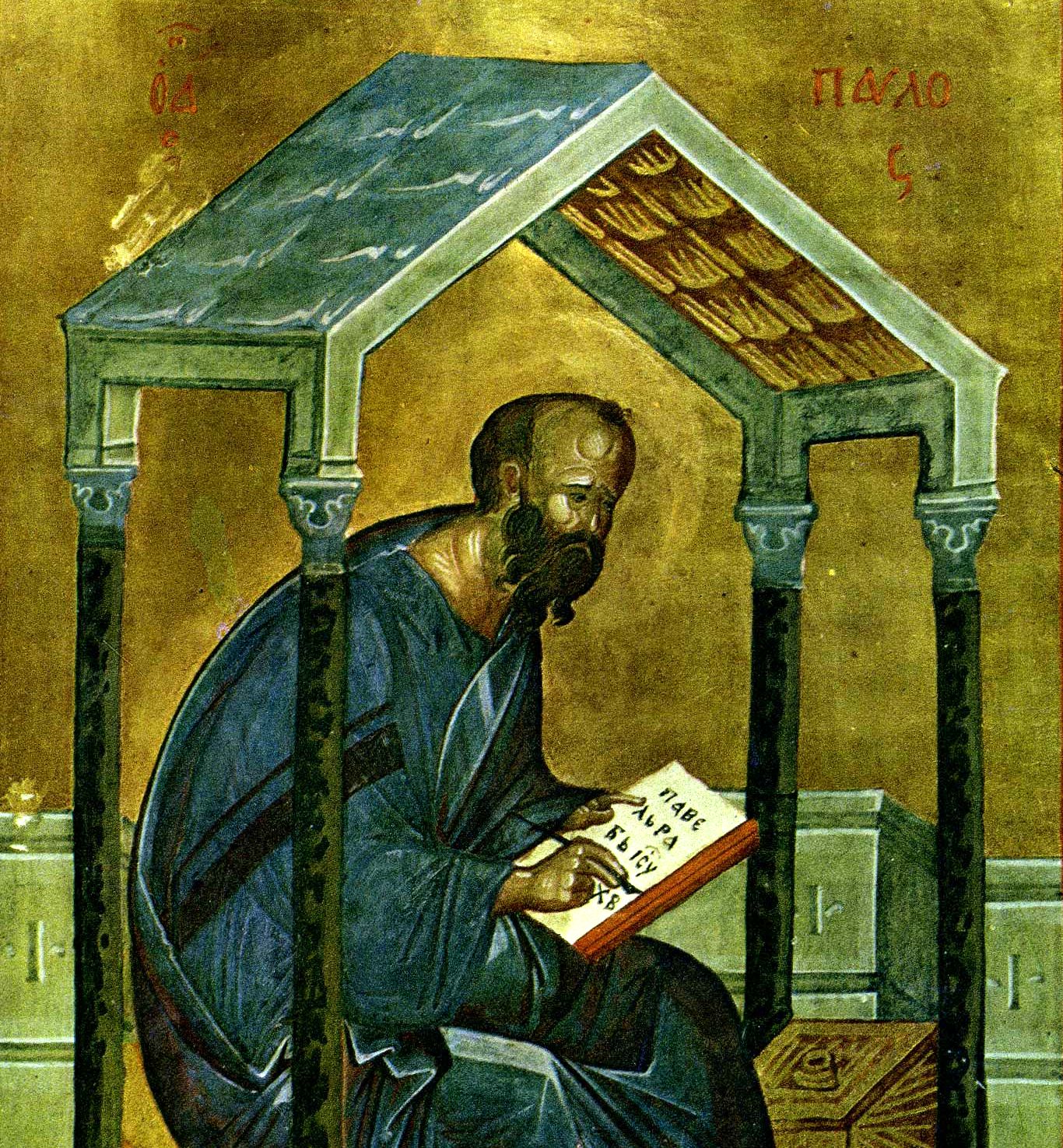
Today you heard in the apostolic reading part of the epistle to the Ephesians of the holy Apostle Paul. This is extremely important, you need to understand this. You didn’t quite understand the reading in Slavonic, so I’ll read it first in Russian, but don’t blame me if I read and preach while sitting, because I don’t feel very well.
Addressing the pagans who were inhabitants of Ephesus and now believe in Christ, Saint Paul says to them thus:
“Therefore remember that you, once Gentiles in the flesh — who are called Uncircumcision by what is called the Circumcision made in the flesh by hands — that at that time you were without Christ, being aliens from the commonwealth of Israel and strangers from the covenants of promise, having no hope and without God in the world. But now in Christ Jesus you who once were far off have been brought near by the blood of Christ. For He Himself is our peace, who has made both one, and has broken down the middle wall of separation, having abolished in His flesh the enmity, that is, the law of commandments contained in ordinances, so as to create in Himself one new man from the two, thus making peace, and that He might reconcile them both to God in one body through the cross, thereby putting to death the enmity. And He came and preached peace to you who were afar off and to those who were near. For through Him we both have access by one Spirit to the Father” (Eph. 2:11-18).
November 25, 2022
Homily on the Holy Great Martyr Katherine (St. Luke of Simferopol)
(Delivered in 1958)
This year, the Holy Church celebrates the memory of the Holy Great Martyr Katherine on the twenty-seventh week after Pentecost. Therefore, I consider it appropriate to draw your attention to the great life of this Saint.
Why is she called the Great Martyr? Is it because, as many people think, that the Holy Church rewards with this name those holy martyrs who have endured especially grave and terrible tortures and torments and the most cruel death for our Lord Jesus Christ? No, not because of this.
November 24, 2022
Homily on Giving Thanks to God For All Things (St. Basil the Great)
By St. Basil the Great
However, it is necessary to anticipate the objections that we encounter from our adversaries, who criticize the Apostles injunctions as unattainable. For what is the virtue, they say, in passing ones life in gladness of soul, in joy and good cheer night and day? And how is it possible to achieve this, when we are beset by countless unexpected evils, which create unavoidable dejection in the soul, on account of which it is no more feasible for us to rejoice and be of good cheer than for one who is being roasted on a gridiron not to feel agony or for one who is being goaded not to suffer pain?
November 23, 2022
On Giving Thanks to God For All Things (St. Nikodemos the Hagiorite)
How Saint Amphilochios of Iconium Cleansed the Church of Arian Heretics
Saint Amphilochios shepherded the flock of Christ for many years, because his life extended until the reign of Theodosius the Great and his sons. As a teacher of the Orthodox faith, he fought against the heresy of Arius, he suffered many persecutions and tortures from heretics, he was a co-struggler of the Holy Fathers in the fight against the blasphemy of Eunomius, and at the Second Ecumenical Synod he fought a lot against the pneumatomachian Macedonius and supporter of the heresy of Arius. Because of such zeal for the faith and because of his highly virtuous life, Saint Amphilochios was celebrated everywhere and was loved by the Holy Fathers, especially by Saint Basil the Great and Saint Gregory the Theologian, who considered him a close friend and corresponded with him.
November 22, 2022
The Archangel Michael Visits Saint Iakovos Tsalikes
The Holy Elder Iakovos was not only privileged to see Angels and Archangels at the Holy Altar.
He also saw Michael the Commander of the Heavenly Army giving him instructions for the construction of his church outside the Liturgy.
In 1961 Father Iakovos together with the then abbot decided to build a chapel in honor of the Archangels Michael and Gabriel.
The abbot chose the place and demarcated the area. At night, however, an officer with a golden sword, tall, blond and handsome, appeared to Father Iakovos and said to him:
"I am the Archangel Michael. I do not wish my temple to be built where you marked, but here where I will show you."
How Saint Iakovos of Evia Saved a Professor from a Dangerous Situation
"One night, a few days ago, I saw very vividly in my dream Elder Iakovos [Tsalikis] and he said to me:
'My child D., open the hood of your car, because you are in danger.'
What the Spirit of His Dead Aunt Told Saint Iakovos of Evia
"Since I was a child, I go to the cemetery every day and think about death. All my relatives have died. Anyway, I commemorate an aunt of mine. I saw the aunt also and she told me:
'Ah, my nephew Iakovos, thank you for what you are sending me. You send me a lot, but you know there are other people who are unfortunate and hungry and have no one in the world to think of them, to care for them.'
On Judgment and Forgiveness (St. Iakovos Tsalikes)
"I also want to be judged with mercy for my sins.
If God judged us severely for our mistakes, He would not be a God of love and peace, but of war and terror.
People have a duty to return to God.
Years of experience dealing with people who have serious problems has taught me that when people are judged harshly for their mistakes, they panic and run away.
When they encounter forgiveness, they understand their errors and are ready to try to change their lives."
Source: From the book by Τάσου Μιχαλά, Ένας σύγχρονος ερημίτης, Αρχιμανδρίτης Ιάκωβος Τσαλίκης, Ηγούμενος Ι. Μ. Οσίου Δαβίδ. Translation by John Sanidopoulos.
Holy New Confessor Anthimos, Metropolitan of Athens and Euripus and President of Crete (+ 1371)
November 21, 2022
Homily Four on the Entrance of the Most Holy Theotokos (St. Luke of Simferopol)
(Delivered in 1958)
From statistical data on people who have reached a very advanced age, we learn that they are especially numerous among those living on the high mountains of the Caucasus and Azerbaijan and on other high mountains. And in our time, somewhere in Azerbaijan, there lives an extraordinary old man who has reached one hundred and fifty years, and there are many centenarians there.
How can we explain this extraordinary influence of high mountains on the longevity of people's lives?
Undoubtedly, to a very large extent because the highlanders breathe the purest air all their lives and eat mainly dairy products and the meat of healthy sheep.
Homily Three on the Entrance of the Most Holy Theotokos (St. Luke of Simferopol)
(Delivered in 1957)
The life of the Most Holy and Most Pure and Most Blessed Theotokos and Ever-Virgin Mary, who was the Most Pure Temple of the Savior, who was above all Cherubim and Seraphim, could not begin life the way every ordinary person begins: the glorious beginning of Her life should have been marked. Thus the Lord God placed in the hearts of Her holy parents Joachim and Anna a presentiment that the Most Pure Maiden, their only daughter, was prepared by God for some extraordinary path, a path much higher than the usual path of people. And guided by this presentiment, even before the birth of the Blessed Virgin Mary, they dedicated Her to God: they made a vow to God that She would serve Him.
November 20, 2022
Homily for the Ninth Sunday of Luke (St. Luke of Simferopol)
(Delivered on December 11, 1949)
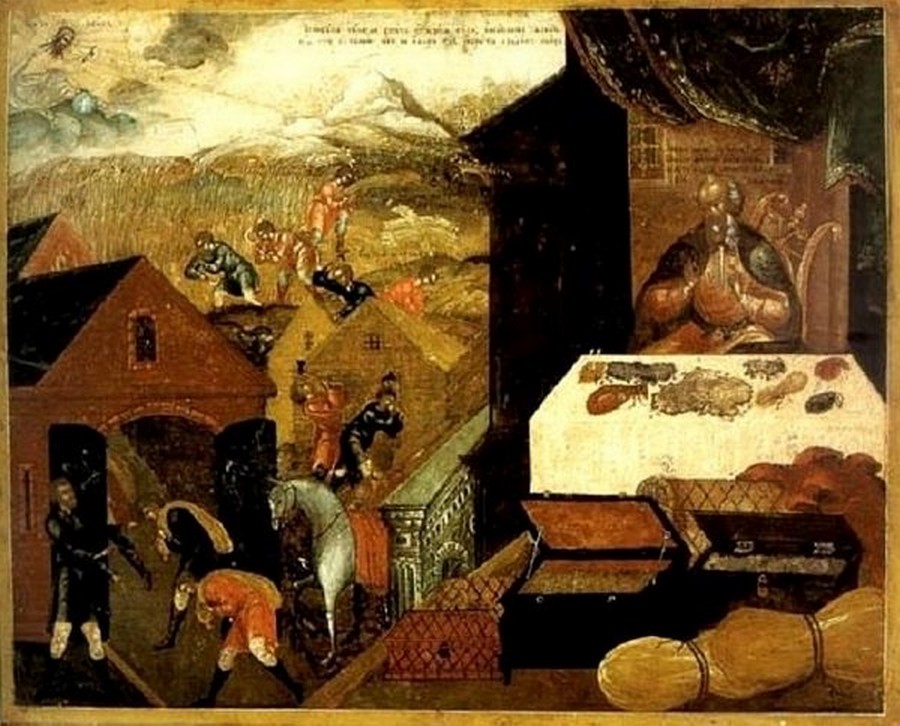
Then He spoke a parable to them, saying: “The ground of a certain rich man yielded plentifully. And he thought within himself, saying, ‘What shall I do, since I have no room to store my crops?’ So he said, ‘I will do this: I will pull down my barns and build greater, and there I will store all my crops and my goods. And I will say to my soul, “Soul, you have many goods laid up for many years; take your ease; eat, drink, and be merry.” ’ But God said to him, ‘Fool! This night your soul will be required of you; then whose will those things be which you have provided?’ (Luke 12:16–20).
Reflection on the Ninth Sunday of Luke (St. Theophan the Recluse)
Luke 12:16-21
November 19, 2022
Holy Martyr Barlaam of Antioch: Summaries of the Encomiums of Basil the Great and John Chrysostom
Once the deaths of holy men were adorned with lamentations and tears: Joseph wept bitterly for Jacob when he died; the Jews greatly lamented Moses’ death; they honoured Samuel with many tears. But now we rejoice in the deaths of the hallowed ones. The nature of distressing things has been transformed after the cross. We no more accompany the deaths of the saints with lamentations, but dance at their tombs in godly companies. For death is just sleep for the righteous. It is rather departure for a better life. For that reason, the martyrs rejoice when they are slain. The desire for a happier life mortifies the distress of slaughter. The martyr does not look at the perils, but at the crowns of victory. He is not distressed by the beatings, but counts the prizes. He does not see the torturers flogging him down here, but envisions the angels acclaiming from above. He does not consider the temporary state of danger, but the eternal natue of his reward. Even among us, he already enjoys a splendid repayment, as he is applauded by everyone’s pious acclamations, and captivates from his tomb myriads of crowds. This is then what was done today by the brave Barlaam....
November 17, 2022
Miracles of Saints Sergius and Nikon of Radonezh
During their life on earth, the venerable fathers Sergius and Nikon were very close to each other. That mutual closeness does not leave them even in eternal life, because the love of the saints, like the love of the Divine, is not subject to the law of time. Both of them appeared together many times and performed miracles together.
A resident of Moscow, named Symeon, who was born according to the Saint's prediction, became so terribly ill that he could neither move, nor sleep, nor receive food. Simply, he was lying on his bed like a dead man. Tormented like that, he once at night began calling for help from Saint Sergius: "Help me, Venerable Sergius! Deliver me from this disease! Even during your life on earth you were so kind to my parents and you predicted my birth to them; don't forget me, who is struggling with such a serious illness!" And behold, two old men stood in front of him one after the other: one of them was Nikon. The sick man recognized him immediately, because he knew this Saint personally during his life on earth. Then it would be clear to the sick person that the second of the Saints who appeared was Venerable Sergius himself. The wonderful old man made the sign of the cross over the sick man, after which he ordered Nikon to take the icon that was near the bed. That icon was once given to Symeon by Venerable Nikon himself. Then, the sick man was made to remove all his skin from his body. After that, the Saints became invisible. And at that moment, Symeon felt that he was completely healed: he got up on his bed, and no one was holding him anymore. Then he understood that his skin had not fallen off, but that the disease had left him. His joy was great: standing up, he began to fervently thank Saint Sergius and Venerable Nikon for his unexpected and wonderful healing.
Oration on Saint Gregory the Wonderworker (St. Gregory of Nyssa)
By St. Gregory of Nyssa
(Delivered on November 17, 380)
Both our essay and the congregation assembled here have one aspiration, namely, to reflect upon the great Gregory. For my part, it seems best to consider the fortitude of his virtue and wonderful achievements and by invoking his help, such an outstanding example may assist us in how we should conduct our lives. Indeed, this is a gift from the Spirit who provides a living example and testimony, thereby affirming each person with unflagging dedication. Since the Spirit's power is the foundation which enables such a radiant and admired life to flourish, prayer upholds us when we must speak of it. We should not scorn this praise because this man's memory demonstrates in the present his witness which had been manifested through his deeds.
How To Properly Prepare for Christmas (Metr. Athanasios of Limassol)
The period leading up to Christmas is especially blessed by God, because it leads us liturgically and festively to the main day, where the Orthodox Church celebrates the event of Christ's birth. Like all the feasts of our Church, Christmas does not only have a commemorative character, but the main purpose is for man to share in this grace, which God gives through the feasts of our Church.
It has been observed through the experience of the Saints and Fathers of our Church that these days are distinguished for the overflowing grace that is diffused by God and the Holy Spirit to the faithful and are stations in our lives from which we can draw this grace and the communion of the Holy Spirit.
November 15, 2022
Panagia of the Stable in Nichori of the Bosphorus
Nichori (or Neochori, known today as Yeniköy) is located on the European shores of the Bosphorus strait, between the neighborhoods of İstinye and Tarabya. Nichori was until the 1955 Istanbul pogrom a neighborhood with a considerable Greek (Roman) population as well as Armenian and Jewish communities. It was here behind the yali of Ahmed Afif Pasha, where Agatha Christie stayed as a guest in 1933 while writing Murder on the Orient Express. There are several Christian churches in the neighborhood. The Greek Orthodox Church of Dormition of the Theotokos (Panayia Kumariotisa Rum Ortodoks Kilisesi) was built in 1837 at the request of Sultan Mahmud II′s personal physician Stephanos Karatheodoris.
Synaxis of the Kupyatich Icon of the Mother of God
While guarding the flock, Anna saw a light in the forest. When she got close to that light, she saw on a tree a medium cross with the image of the Theotokos. Anna took that cross and brought it home, then she returned to her flock. Again she saw the same cross on the same tree. She took it, put the image in her bosom, and once again brought it home. When she wanted to show the cross to her father, she put her hand into her bosom, but the cross was not there. She told her father everything; so she left with her father, saw the cross in the forest and carried it home. The next day the cross was not in the house again. They alarmed the whole village, and all the villagers went and saw the cross and venerated it.
November 14, 2022
November 13, 2022
Homily Two for the Eighth Sunday of Luke (St. Luke of Simferopol)
(Delivered on December 9, 1951)
You heard it in the Slavic reading, now listen to it in Russian translation. (The Gospel of Luke chapter 10, 25-37 is read.)
Why do I consider this parable of Christ one of the most important and profound of His parables? Because in this parable the Lord gave us a genuine revelation, a revelation about who we should consider as our neighbors.
November 12, 2022
Elder Cornelius Marmarinos of Chios (+ 1975)
Cornelius Marmarinos was born in Halkios on the island of Chios in 1885. His birth name was Constantine and his parents were the notary Demetrios Marmarinos and Evanthia Flatsousis. His parents were thrifty and managed to ensure him a good future through education. He attended the Zografio High school of Constantinople.
Holy Hieromartyr Alexander Adrianov (+ 1918)
He was a very zealous, self-sacrificing pastor. Father Alexander built several churches, taught the Law of God, and was a member of various church societies. He was married to the young woman Alexandra, daughter of Vasily Lyubomudrov, priest of the Mikhailo-Arkhangelsk Church in the village of Merkushino. Moreover, the wedding of Father Alexander and Alexandra took place in the village of Merkushino.
November 11, 2022
Saints Nektarios and Amphilochios and the Establishment of the Monastery of Saint Menas in Aegina
When Saint Nektarios went to Aegina, while he was researching to find the place where he would build a monastery, he was received in a vision by Saint Dionysios of Zakynthos, who had formerly been Metropolitan of Aegina, and said to him:
"Come, Nektarios, I have been waiting for you for years, to hand over the island to you."
As Saint Nektarios was talking with Saint Dionysios, he saw a soldier further on and asked Saint Dionysios:
"Who is he?"
"This," he said, "is Saint Menas; he lives here and has a monastery in Aegina!"
November 10, 2022
The Wise and Courageous Metropolitan Paisios II of Caesarea (1776-1871), the Spiritual Predecessor of Saint Arsenios of Cappadocia
The head village of Cappadocia was the saint-bearing Varasos, better known as Farasa, which was the birthplace of two great Saints of the Church, Saint Arsenios of Cappadocia and his spiritual successor Saint Paisios the Athonite. And, as Mr. Lazaros M. Kelekidis writes in his book "Farasa of Cappadocia", it was Saint Paisios who made Farasa known and thanks to him the whole world learned that there in the depths of the East, there was a spring of inexhaustible Roman Orthodox spirituality, a beacon that shone with the unfading light of Orthodoxy.
Saint Arsenios of Cappadocia as a Model for our Lives
Saint Arsenios of Cappadocia was born in 1840 in Farasa of Cappadocia, to pious and virtuous parents, Eleutherios, who was a teacher, and Barbara. He was orphaned at a young age and an aunt, who loved Christ and the Church, undertook to raise him and his brother Vlasios.
Theodore, that was his baptismal name, was sent to study in Nigde and Smyrna. He became a monk at the age of 26, in the Sacred Monastery of the Honorable Forerunner in Flaviana (Zincidere). After about four years, because there was a shortage of priests, Metropolitan Paisios of Caesarea ordained him Deacon and Presbyter, elevated him to an Archimadrite and placed him in Farasa. He also entrusted him with the function of spiritual fatherhood.
November 9, 2022
On Divine Eros (St. Nektarios of Aegina)
Divine eros is perfect love of the Divine, manifested as an unceasing desire of the Divine. Divine eros is born in the pure heart, because in it divine grace descends. The eros for the Divine is a divine gift, which is bestowed upon the pure soul by the divine grace that descends and reveals itself to the soul. Divine eros without divine revelation is not born in any man. Because a soul that has not received revelation, has not received the influence of grace and remains apathetic towards divine eros. It is therefore impossible for eros to be born without a force acting upon the heart, whether divinea force or human.
The lovers of the Divine were drawn to divine eros by the divine grace which acted upon their hearts, revealed itself to their souls, and drew them to God. The lover of the Divine first was loved by the Divine, and then he fell in love with the Divine. The lover of the Divine first became a son of love, and then he loved the heavenly Father.
The Main Cause for the Schism Between Western and Eastern Christianity According to Saint Nektarios (St. Justin Popovich)
From the rich spiritual treasury of Saint Nektarios of Aegina, we have many precious pearls to present to pious readers. His Orthodox theology, his spiritual experience, soul-beneficial teachings and ascetic instructions, all this is abundantly present in his wonderful works, which he wrote following the Holy Fathers of the Orthodox Church in everything. But there is something new in his works, which today's Orthodox reader will find useful and necessary to know, so we will only mention it here. This is the opinion and assessment of Saint Nektarios, as a contemporary Father of the Church and as a Church historian (because he was also a learned theologian), about what were the causes of the split in the Church, that is, in fact, the causes of the separation of the Western Latin Church from the Eastern Orthodox Church.
The Legacy of Saint Nektarios of Aegina (St. Justin Popovich)
No matter where the faithful call upon him and invoke him in prayers with faith, he arrived and always arrives. He heals the demon possessed, strengthens the weak spiritually and physically, straightens and heals the lame, and saves those at sea in a storm.
In a very short time, his holy name became known everywhere: on the land, on the sea, and on the islands; in Europe and America and Africa; wherever there are Orthodox souls, his gracious presence is felt.
November 8, 2022
On the Invisible Angelic World (Archpriest Rodion Putyatin)
About the Invisible World
We cannot see the invisible world; how do we know that this invisible world really exists? We know that God revealed to us about Himself and there were various manifestations from Him. There are many examples of this in Holy Scripture and in the writings of the Holy Fathers. And the mind itself does not reject the existence of the invisible world, and our heart would be hurt if this invisible world did not exist: whoever has nothing left on earth has only consolation in the invisible world. So, there is an invisible, spiritual world. After all, it is only impossible to reject the existence of the invisible world because we do not see it. The invisible world is invisible only to us, and those who live there see everything in it clearly, just as we now see each other, and even much more clearly.
November 7, 2022
History, Politics and the Church (Metr. Hierotheos of Nafpaktos)
November 6, 2022
Homily on the Healing of the Woman With the Issue of Blood and the Raising of Jairus' Daughter (St. John Chrysostom)
(Homily 31 on Matthew)
The deed overtook the words; so that the mouths of the Pharisees were the more stopped. For both he that came was a ruler of the synagogue, and his affliction terrible. For the young damsel was both his only child, and twelve years old, the very flower of her age; on which account especially He raised her up again, and that immediately.
Homily on the Seventh Sunday of Luke (Archpriest Rodion Putyatin)
By Archpriest Rodion Putyatin
"Do not be afraid, only believe, and she will be healed" (Luke 8:50).
November 4, 2022
The Chapel of Saint Ioannikios on the Island of Hydra
He was born in Bithynia in the year 740 AD, excelled in the Byzantine army, was led into the error of iconoclasm, but repented and returned to the Orthodox faith, climbed Mount Olympus in Bithynia and lived as an ascetic there, as well as in other areas.
He learned and memorized thirty of the Psalms of David and together he sang a prayer of his own, which the Church still preserves, slightly modified: "God is my hope, Christ is my refuge, the Holy Spirit is my shelter."
November 2, 2022
An Abbess Recalls Her Experiences With Saint Gabriel of Georgia
The first time I met Elder Gabriel in 1986, it was in the Sioni Cathedral. His strange behavior caught my attention. During the Divine Liturgy, he shouted continuously and loudly. Leaving the temple, I saw the Elder falling at the feet of the Patriarch, asking for forgiveness. From then on, his form was imprinted on my memory. We often noticed his strange behavior. The Elder could call a taxi and not pay the driver, while giving the other driver more than he was entitled to. Furthermore, he could expel from the church any government employee or even a simple citizen, with shouts and without any apparent reason. His attitude towards people was tailored towards the individual.
When Elder Theophylaktos of New Skete Was Visited by the Holy Unmercenary Saints
Of course I knew it was a war, but I couldn't get rid of it.
Because of my inexperience I did not fight it from the beginning, when this passion first appeared to me, and it became a permanent cross for me.
After I sat down to rest I saw a group of people of different ages coming up from the street of Kyriakos [of New Skete] upwards, towards my Hut, and they were talking among themselves.
I watched who they were and where they were going.
"The Holy Unmercenary Saints Gave Me Holy Communion"
On 9/27/2001 I suffered a severe stroke (thrombotic) and my left arm and leg were completely immobilized. My speech was slow and unsteady. I stayed in the hospital for ten days and then I went home. At the end of December of the same year, I started to get up and walk around with a cane.
On 1/9/2002, even while I was on blood thinners, I suffered a second stroke and at the same time a pulmonary embolism. Again the left arm and leg remained motionless. The doctors said there is no salvation for me. This treatment does not justify the blood clot that caused the cerebral and pulmonary embolism. I am again at AHEPA [a hospital in Thessaloniki] on a bed of pain.
November 1, 2022
Venerable David of Evia and the Unbelieving Pilgrim
This fellow villager of ours was old.
They explained to him, when they went to the hermitage, that Elder Iakovos [Tsalikis] stayed here in the evenings where he read the Supplicatory Canon, and he hung his cassock there on a nail. There was still a nail from the old nails in the stones of the cave.
For more than fifteen years, the Mystagogy Resource Center has been a labor of love dedicated to making the riches of the Orthodox Christian tradition freely available to people throughout the world.
Thousands of articles, translations, lives of saints, theological reflections, historical resources, and daily materials have been published across this ministry’s websites, all offered free of charge for anyone seeking a deeper understanding of the Orthodox faith.
This is a one-man ministry that requires countless hours of research, translation, writing, editing, and maintenance each day.
If this work has spiritually benefited, educated, encouraged, or inspired you in any way, I humbly ask you to consider supporting this ministry financially.
Generous annual and monthly benefactors make possible the continuation and expansion of this work for the future, for without such support this ministry cannot exist.
Every contribution, whether large or small, truly makes a difference and is deeply appreciated. May God bless you abundantly for your generosity and prayers.