Showing posts with label St. Luke of Simferopol. Show all posts

January 8, 2023

Homily on the Sunday After Theophany (St. Luke of Simferopol)


By St. Luke, Archbishop of Simferopol and All Crimea

(Delivered in 1957)

At Vespers of Great Feasts, the so-called narratives (paremoias) are read, which are usually excerpts from the books of the Old Testament. They set out the events of former times, reminiscent and even explaining what the Holy Church celebrates on a given day. On the greatest feasts, the number of narratives, usually not exceeding three, greatly increases, and on the day of the Resurrection of Christ it reaches fifteen, and on the day of Theophany - thirteen.

When considering the narratives of Theophany, it is immediately evident that they deal with miraculous changes in the properties of water under the direct influence of the commands of God Himself or the actions of the great Saints inspired by Him.

January 6, 2023

Homily One on the Theophany of the Lord (St. Luke of Simferopol)


 By St. Luke, Archbishop of Simferopol and All Crimea

(Delivered in 1954)

All of you know that the people of Israel were the chosen people of God, but not everyone knows that this people in Holy Scripture is called the people with necks unbending as iron and foreheads as hard as bronze.

The brass-foreheaded people took the ardent calls of the great prophets for the correction of their ways and the great predictions about their Savior and the Messiah very hard and did not listen to them. They held their proud head high and did not bend their iron neck in repentance and humility.

The Son of God Himself descended to earth and incarnated in humble human nature. From His mouth the stiff-necked people of Israel heard the Divine message and the revelation of the mysteries of God; they saw many of His miracles.

December 27, 2022

Homily Five on the Nativity of Christ (St. Luke of Simferopol)

 
 By St. Luke, Archbishop of Simferopol and All Crimea

"Strange it was seeing God incarnate, let us therefore shun the vain world and set our mind on things divine; for God came down to earth that He might raise to heaven us who cry to Him: Alleluia!" (Akathist to the Sweetest Jesus, kontakion 8)

Truly strange, unheard of and amazing was the appearance on earth of the Eternal Son of God, our Lord Jesus Christ, the Second Person of the Holy Trinity.

It would seem that standing before the incarnate Son of God, all mankind would have to fall on their faces .... But this was not the case. The attitude of people to this greatest event in the history of the world was very different.

December 26, 2022

Homily Four on the Nativity of Christ (St. Luke of Simferopol)


 By St. Luke, Archbishop of Simferopol and All Crimea

(Delivered in 1958)

Once again in our lives the Lord vouchsafed us to celebrate the greatest event in the history of the world, which indescribably amazed all the Angels of heaven. They saw the Eternal Son of God descend to earth from heaven, the Second Person of the Holy Trinity, in human flesh, which He was pleased to receive. They saw the God-man, which they could never have imagined.

If even the angels of God are astonished to the extreme, then what will we, the people of the earth, say? Of course, we cannot say anything, but only humbly listen to what the Creator of this amazing event Himself says about this. Listen to what He Himself says: “I came as a light into the world, so that everyone who believes in Me should not remain in darkness” (John 12:46).

December 25, 2022

Homily Three on the Nativity of Christ (St. Luke of Simferopol)

 
 By St. Luke, Archbishop of Simferopol and All Crimea

(Delivered in 1957)

"A strange and most glorious mystery do I behold: the cave is heaven; the Virgin - the throne of the cherubim; the manger - the place wherein lay Christ God, Whom nothing can contain, Whom praising, we magnify" (Irmos of the Nativity of Christ, ode 9).

On this great day, the Holy Church remembers a deeply mysterious and incomprehensibly great event, before which all other events in the history of the world are completely insignificant - the Nativity of the Eternal Son of God in human flesh from the Most Holy and Blessed Virgin Mary, for the salvation of the human race perishing in sins.

December 11, 2022

Homily One for the Eleventh Sunday of Luke (St. Luke of Simferopol)

 
 By St. Luke, Archbishop of Simferopol and All Crimea

(Delivered on December 30, 1951)

Hear the words of the holy apostle and evangelist John the Theologian, written by him in his great Apocalypse: “And I heard, as it were, the voice of a numerous people, as the sound of many waters, as the voice of mighty thunders, saying: 'Alleluia! for the Lord God Almighty reigns. Let us rejoice and be glad and give Him glory; for the marriage of the Lamb has come, and His bride has prepared herself.' And it was given to her to put on fine linen, clean and bright; the fine linen is the righteousness of the saints. And the angel said to me: 'Write: Blessed are those who are called to the marriage supper of the Lamb.' And he said to me: 'These are the true words of God'” (Apoc. 19:6-9).

Blessed are those who are called to the marriage supper of the Lamb.

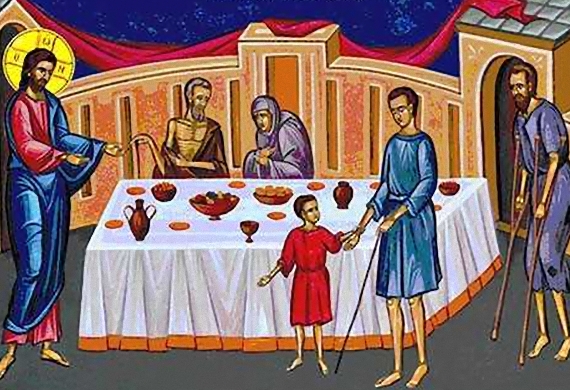
The Lord spoke about this wedding supper in his great parable about those who were invited to the supper, which you heard in the current Gospel reading.

December 6, 2022

Homily on Saint Nicholas of Myra (St. Luke of Simferopol)


By St. Luke, Archbishop of Simferopol and All Crimea

(Delivered on December 6/19, 1953)

Listen to the words with which Holy Scripture begins: “In the beginning God created the heavens and the earth. The earth was formless and empty, and darkness was over the deep, and the Spirit of God hovered over the waters. And God said: 'Let there be light.' And there was light. And God saw the light that it was good, and God separated the light from the darkness. And God called the light day, and the darkness night."

People who think they are educated scoff at the biblical story of the creation of the world, and especially scoff at the fact that the light was created on the first day, and the sun, moon and stars only on the fifth day. They mock our belief that light could exist when there were no heavenly bodies.

December 4, 2022

Homily Two for the Tenth Sunday of Luke (St. Luke of Simferopol)


By St. Luke, Archbishop of Simferopol and All Crimea

(Delivered on November 29, 1958)


Our Lord Jesus Christ once entered the synagogue and saw a woman there who had been suffering severely for 18 years: she was crouched, low bent and could not straighten up.

He commanded her to come to the middle and with one word of His, with one Divine command, he healed her - the woman suddenly straightened up to her full height and praised God.

The people rejoiced at seeing such a miracle, but the leader of the synagogue and the Pharisees did not rejoice like everyone else, but became indignant and turned to the people with a sharp remark: "Not on the Sabbath" (Luke 13:14).

November 28, 2022

Homily for the Thirteenth Sunday of Luke (St. Luke of Simferopol)

 
 By St. Luke, Archbishop of Simferopol and All Crimea

(Delivered on December 20, 1953)

Listen again to the Gospel reading that was read today, let us delve into it, for I want to explain it to you.

Now a certain ruler asked Him, saying, "Good Teacher, what shall I do to inherit eternal life?" So Jesus said to him, "Why do you call Me good? No one is good but One, that is, God. You know the commandments: ‘Do not commit adultery,’ ‘Do not murder,’ ‘Do not steal,’ ‘Do not bear false witness,’ ‘Honor your father and your mother.’” And he said, “All these things I have kept from my youth.” So when Jesus heard these things, He said to him, “You still lack one thing. Sell all that you have and distribute to the poor, and you will have treasure in heaven; and come, follow Me.” But when he heard this, he became very sorrowful, for he was very rich. And when Jesus saw that he became very sorrowful, He said, “How hard it is for those who have riches to enter the kingdom of God! For it is easier for a camel to go through the eye of a needle than for a rich man to enter the kingdom of God.” And those who heard it said, “Who then can be saved?” But He said, “The things which are impossible with men are possible with God” (Lk. 18:18–27).

November 27, 2022

Homily for the Epistle Reading on the Twenty-Fourth Sunday After Pentecost (St. Luke of Simferopol)


 By St. Luke, Archbishop of Simferopol and All Crimea

(Delivered on November 23, 1952)

Today you heard in the apostolic reading part of the epistle to the Ephesians of the holy Apostle Paul. This is extremely important, you need to understand this. You didn’t quite understand the reading in Slavonic, so I’ll read it first in Russian, but don’t blame me if I read and preach while sitting, because I don’t feel very well.

Addressing the pagans who were inhabitants of Ephesus and now believe in Christ, Saint Paul says to them thus:

“Therefore remember that you, once Gentiles in the flesh — who are called Uncircumcision by what is called the Circumcision made in the flesh by hands — that at that time you were without Christ, being aliens from the commonwealth of Israel and strangers from the covenants of promise, having no hope and without God in the world. But now in Christ Jesus you who once were far off have been brought near by the blood of Christ. For He Himself is our peace, who has made both one, and has broken down the middle wall of separation, having abolished in His flesh the enmity, that is, the law of commandments contained in ordinances, so as to create in Himself one new man from the two, thus making peace, and that He might reconcile them both to God in one body through the cross, thereby putting to death the enmity. And He came and preached peace to you who were afar off and to those who were near. For through Him we both have access by one Spirit to the Father” (Eph. 2:11-18).

November 25, 2022

Homily on the Holy Great Martyr Katherine (St. Luke of Simferopol)

 
 By St. Luke, Archbishop of Simferopol and All Crimea

(Delivered in 1958)

This year, the Holy Church celebrates the memory of the Holy Great Martyr Katherine on the twenty-seventh week after Pentecost. Therefore, I consider it appropriate to draw your attention to the great life of this Saint.

Why is she called the Great Martyr? Is it because, as many people think, that the Holy Church rewards with this name those holy martyrs who have endured especially grave and terrible tortures and torments and the most cruel death for our Lord Jesus Christ? No, not because of this.

November 21, 2022

Homily Four on the Entrance of the Most Holy Theotokos (St. Luke of Simferopol)


 By St. Luke, Archbishop of Simferopol and All Crimea

(Delivered in 1958)

From statistical data on people who have reached a very advanced age, we learn that they are especially numerous among those living on the high mountains of the Caucasus and Azerbaijan and on other high mountains. And in our time, somewhere in Azerbaijan, there lives an extraordinary old man who has reached one hundred and fifty years, and there are many centenarians there.

How can we explain this extraordinary influence of high mountains on the longevity of people's lives?

Undoubtedly, to a very large extent because the highlanders breathe the purest air all their lives and eat mainly dairy products and the meat of healthy sheep.

Homily Three on the Entrance of the Most Holy Theotokos (St. Luke of Simferopol)


 By St. Luke, Archbishop of Simferopol and All Crimea

(Delivered in 1957)

The life of the Most Holy and Most Pure and Most Blessed Theotokos and Ever-Virgin Mary, who was the Most Pure Temple of the Savior, who was above all Cherubim and Seraphim, could not begin life the way every ordinary person begins: the glorious beginning of Her life should have been marked. Thus the Lord God placed in the hearts of Her holy parents Joachim and Anna a presentiment that the Most Pure Maiden, their only daughter, was prepared by God for some extraordinary path, a path much higher than the usual path of people. And guided by this presentiment, even before the birth of the Blessed Virgin Mary, they dedicated Her to God: they made a vow to God that She would serve Him.

November 20, 2022

Homily for the Ninth Sunday of Luke (St. Luke of Simferopol)


 By St. Luke, Archbishop of Simferopol and All Crimea

(Delivered on December 11, 1949)

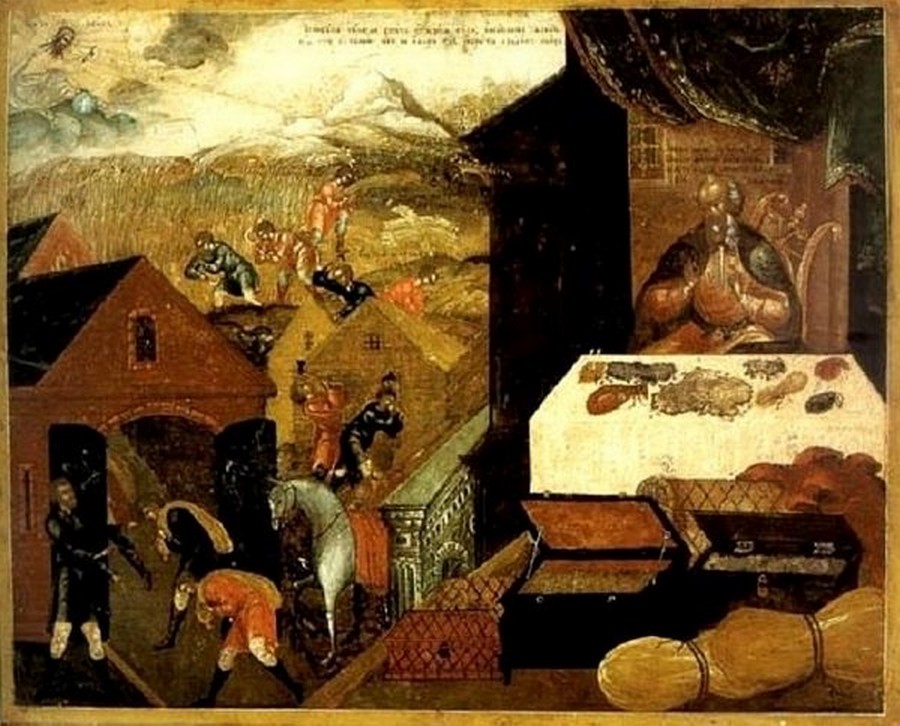
Then He spoke a parable to them, saying: “The ground of a certain rich man yielded plentifully. And he thought within himself, saying, ‘What shall I do, since I have no room to store my crops?’ So he said, ‘I will do this: I will pull down my barns and build greater, and there I will store all my crops and my goods. And I will say to my soul, “Soul, you have many goods laid up for many years; take your ease; eat, drink, and be merry.” ’ But God said to him, ‘Fool! This night your soul will be required of you; then whose will those things be which you have provided?’ (Luke 12:16–20).


November 13, 2022

Homily Two for the Eighth Sunday of Luke (St. Luke of Simferopol)


 By St. Luke, Archbishop of Simferopol and All Crimea

(Delivered on December 9, 1951)

The parable of Christ about the merciful Samaritan, which you have now heard, is infinitely deep and important for us, and therefore I want you to remember it well.

You heard it in the Slavic reading, now listen to it in Russian translation. (The Gospel of Luke chapter 10, 25-37 is read.)

Why do I consider this parable of Christ one of the most important and profound of His parables? Because in this parable the Lord gave us a genuine revelation, a revelation about who we should consider as our neighbors.

October 28, 2022

Homily Four on the Holy Protection of the Most Holy Theotokos (St. Luke of Simferopol)

 
 By St. Luke, Archbishop of Simferopol and All Crimea

(Delivered in 1958)

Many times the Most Holy Theotokos appeared to a separate great saint, usually accompanied by one or two apostles of Christ, and she appeared to Saint Seraphim of Sarov alone. But she never appeared to anyone in such glory as in the Blachernae Church in Constantinople, on this great feast, named after her Protection.

There were many people in the temple, and among them were blessed Andrew, a holy fool for Christ's sake, with his disciple Epiphanios.

There was an all-night vigil. The people fervently prayed for deliverance from the invasion of the barbarians, who had already approached Constantinople itself.

October 23, 2022

Homily Two for the Sixth Sunday of Luke (St. Luke of Simferopol)

 
 By St. Luke, Archbishop of Simferopol and All Crimea

(Delivered in 1958)

About the great miracle of the Lord Jesus Christ, about the healing of the demon-possessed Gadarene by Him, I have repeatedly told you and my former flocks. Genuine demonic possession is, of course, rare. A huge number of demons, a whole legion of them, are infused into the bodies and souls of the unfortunate demoniacs. But demons wage an unceasing struggle against every person in order to subjugate him to their power. This is what we read about this struggle in the epistle of the Apostle Paul to the Ephesians: “... our struggle is not against flesh and blood, but against principalities, against authorities, against the rulers of the darkness of this world, against spirits of wickedness in high places” (Eph. 6:12).

Homily One for the Sixth Sunday of Luke (St. Luke of Simferopol)


 By St. Luke, Archbishop of Simferopol and All Crimea

(Delivered on November 25, 1951)

The Lord Jesus Christ sailed with His disciples on the Sea of Tiberias, sailed to the eastern shore of this lake.

On the way, He performed a great miracle of calming the storm by one command of His: He ordered the wind and waves to calm down - and they calmed down.

We went ashore in the country of the Gadarenes, and look what happened there.

“And when He got out of the boat, immediately a man who came out of the tombs met Him, possessed by an unclean spirit, he had a dwelling in the tombs, and no one could bind him even with chains ... he tore the chains and broke the shackles, and no one was able to tame him; always, night and day, in mountains and graves, he shouted and cut himself with stones; but when he saw Jesus from afar, he ran and worshiped Him...” (Mark 5:1-6).

October 18, 2022

Homily Six on the Feast of the Holy Apostle and Evangelist Luke (St. Luke of Simferopol)


By St. Luke, Archbishop of Simferopol and All Crimea

(Delivered on October 18/31, 1958)

In the epistle to the Romans, the holy Apostle Paul writes great words that should be the basis of the life of every Christian: “... love is the fulfillment of the law” (Romans 13:10).

In the same great apostle, in the first epistle to the Corinthians, we read the great commandment given to us: "Pursue love ..." (1 Corinthians 14:1).

How should we understand these words of the great teacher of the nations? They require a twofold understanding: by fulfilling the commandments of Christ, we must achieve such a purity of heart that it would be a container of love for all people. On the other hand, we must become worthy of our neighbors' love for us.

Homily Five on the Feast of the Holy Apostle and Evangelist Luke (St. Luke of Simferopol)

 
By St. Luke, Archbishop of Simferopol and All Crimea

(Delivered on October 18/31, 1957)

After the ascension into heaven of our Lord Jesus Christ, tasks of the greatest difficulty were presented before His holy Apostles. They had to radically change the whole worldview of the people of the ancient pagan world; to change the whole course of world history. They had to pour the new wine of Christ's teaching into the old wineskins of the minds and hearts of people who had been in darkness for an infinitely long time, whose eyes were blinded by the light of Christ.

In dilapidated skins, the strongest fermentation of new wine took place. They were torn, and no longer wine flowed out of them, but the blood of countless martyrs of Christ.

Support the Mystagogy Resource Center

For more than fifteen years, the Mystagogy Resource Center has been a labor of love dedicated to making the riches of the Orthodox Christian tradition freely available to people throughout the world.

Thousands of articles, translations, lives of saints, theological reflections, historical resources, and daily materials have been published across this ministry’s websites, all offered free of charge for anyone seeking a deeper understanding of the Orthodox faith.

This is a one-man ministry that requires countless hours of research, translation, writing, editing, and maintenance each day.

If this work has spiritually benefited, educated, encouraged, or inspired you in any way, I humbly ask you to consider supporting this ministry financially.

Generous annual and monthly benefactors make possible the continuation and expansion of this work for the future, for without such support this ministry cannot exist.

Every contribution, whether large or small, truly makes a difference and is deeply appreciated. May God bless you abundantly for your generosity and prayers.

❖ ❖ ❖
PayPal • Credit Card • Debit Card • Venmo
Become a Patron on Patreon