

 |
| St. Alexander Adrianov (Feast Day - November 12) |
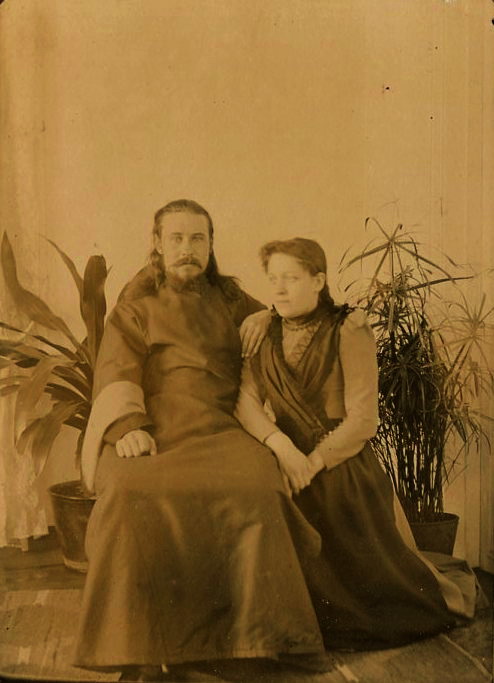
Father Alexander Adrianov was born in 1858 in the district of Nizhneturinsky (now the city of Nizhnyaya Tura) to the family of a priest, and from childhood he wanted to become a priest. Graduating from seminary, after a while he was ordained a priest, and for the rest of his life, for 24 years, he served the Ekaterinburg Diocese in the Three Hierarchs Church of Nizhneturinsky.
He was a very zealous, self-sacrificing pastor. Father Alexander built several churches, taught the Law of God, and was a member of various church societies. He was married to the young woman Alexandra, daughter of Vasily Lyubomudrov, priest of the Mikhailo-Arkhangelsk Church in the village of Merkushino. Moreover, the wedding of Father Alexander and Alexandra took place in the village of Merkushino.
After the revolution, Father Alexander courageously continued to fulfill his pastoral duty. He was left completely alone in the parish, due to the killing off of the priests, and until the last day he served divine services every day. And it was during a service, right in the temple, that he was arrested. This happened on November 8/21, 1918, on the feast of the Synaxis of the Archangel Michael, at the time when Father Alexander was serving the Liturgy. His former student Viktor Cherniltsev later recalled that the priest was arrested for delivering sermons. “He was shot for some kind of seditious sermon denouncing cruel reprisals,” wrote Viktor Fedorovich.
On November 12/25, the priest was brutally tortured to death by the communists at the Vyya railway station. Evidence has been preserved that not only did he not renounce the faith, but he fervently prayed until the last moment. So said one of the participants in the murder, the Red Army soldier Shipitsyn, in 1967 when he said that "when the priest was led to the execution, he repeated: 'Lord, have mercy, Lord, have mercy on me a sinner!'"
The Red Army soldiers severely beat the sixty-year-old priest, crushed his head, and then shot him in the back of the head. The priest also met death with a prayer, folding his arms crosswise on his chest.
A few days later, the body of Father Alexander was found lightly covered with snow, with his arms crossed over his chest, and transported to the Church of the Three Hierarchs. One of the participants in the burial recalled: “The news - 'they brought the corpse of Father Alexander' - instantly spread around the district. The people, deeply loving dear father, silently wept and went out to see him off to the grave. Father Alexander left a good memory among the people and especially in the children's hearts of his students. Eternal memory to you, ever-memorable Father Alexander, good shepherd!”
Such heartfelt words undoubtedly testify to the fact that Father Alexander really was a good shepherd, ready to give his life for his sheep, for which the parishioners paid him such love.
Father Alexander was buried in the sanctuary of the Three Hierarchs Church, which was later destroyed by the Bolsheviks. Now the temple has been restored, slightly expanded.
In 2018, on the 100th anniversary of Father Alexander's martyrdom, the Holy Synod of the Russian Orthodox Church officially added his name to the Synaxis of the New Martyrs and Confessors of the Russian Church.
He was a very zealous, self-sacrificing pastor. Father Alexander built several churches, taught the Law of God, and was a member of various church societies. He was married to the young woman Alexandra, daughter of Vasily Lyubomudrov, priest of the Mikhailo-Arkhangelsk Church in the village of Merkushino. Moreover, the wedding of Father Alexander and Alexandra took place in the village of Merkushino.
After the revolution, Father Alexander courageously continued to fulfill his pastoral duty. He was left completely alone in the parish, due to the killing off of the priests, and until the last day he served divine services every day. And it was during a service, right in the temple, that he was arrested. This happened on November 8/21, 1918, on the feast of the Synaxis of the Archangel Michael, at the time when Father Alexander was serving the Liturgy. His former student Viktor Cherniltsev later recalled that the priest was arrested for delivering sermons. “He was shot for some kind of seditious sermon denouncing cruel reprisals,” wrote Viktor Fedorovich.
On November 12/25, the priest was brutally tortured to death by the communists at the Vyya railway station. Evidence has been preserved that not only did he not renounce the faith, but he fervently prayed until the last moment. So said one of the participants in the murder, the Red Army soldier Shipitsyn, in 1967 when he said that "when the priest was led to the execution, he repeated: 'Lord, have mercy, Lord, have mercy on me a sinner!'"
The Red Army soldiers severely beat the sixty-year-old priest, crushed his head, and then shot him in the back of the head. The priest also met death with a prayer, folding his arms crosswise on his chest.
A few days later, the body of Father Alexander was found lightly covered with snow, with his arms crossed over his chest, and transported to the Church of the Three Hierarchs. One of the participants in the burial recalled: “The news - 'they brought the corpse of Father Alexander' - instantly spread around the district. The people, deeply loving dear father, silently wept and went out to see him off to the grave. Father Alexander left a good memory among the people and especially in the children's hearts of his students. Eternal memory to you, ever-memorable Father Alexander, good shepherd!”
Such heartfelt words undoubtedly testify to the fact that Father Alexander really was a good shepherd, ready to give his life for his sheep, for which the parishioners paid him such love.
Father Alexander was buried in the sanctuary of the Three Hierarchs Church, which was later destroyed by the Bolsheviks. Now the temple has been restored, slightly expanded.
In 2018, on the 100th anniversary of Father Alexander's martyrdom, the Holy Synod of the Russian Orthodox Church officially added his name to the Synaxis of the New Martyrs and Confessors of the Russian Church.
 ll
ll |
| Church of the Three Hierarchs |


