

 Holy Elisha the Prophet (Feast Day - June 14)
The Holy Prophet Elisha lived in the ninth century before the Birth of Christ, and was a native of the village of Abelmaum, near Jordan. By the command of the Lord he was called to prophetic service by the holy Prophet Elias (Elijah - July 20).
When it became time for the Prophet Elias to be taken up to Heaven, he said to Elisha, "Ask what shall I do for you, before I am taken from you." Elisha boldly asked for a double portion of the grace of God: "Let there be a double portion of your spirit upon me." The Prophet Elias said, "You have asked a hard thing; if you see me when I am taken from you, then so shall it be for you; but if you don't see me, it will not be" (4 [2] Kings 2: 12). As they went along the way talking, there appeared a fiery chariot and horses and separated them both. Elisha cried out, "My father, my father, the chariot of Israel and its horse!" (4 Kings 2: 12). Picking up the mantle of his teacher which fell from the sky, Elisha received the power and prophetic gift of Elias. He spent more than 65 years in prophetic service, under six Israelite kings (from Ahab to Joash). While Elisha lived, he did not tremble before any prince, and no word could overcome him (Sirach 48:13).
The holy prophet worked numerous miracles. He divided the waters of the Jordan, having struck it with the mantle of the Prophet Elias; he made the waters of a Jericho spring fit for drinking; he saved the armies of the kings of Israel and Judah that stood in an arid wilderness by bringing forth abundant water by his prayer; he delivered a poor widow from death by starvation through a miraculous increase of oil in a vessel. The Shunamite woman showing hospitality to the prophet was gladdened by the birth of a son through his prayer, and when the child died, he was raised back to life by the prophet. The Syrian military-commander Namaan was healed from leprosy but the prophet's servant Gehazi was afflicted since he disobeyed the prophet and took money from Namaan on the sly.
Elisha predicted to the Israelite king Joash the victory over his enemies, and by the power of his prayer he worked many other miracles (4 Kings 3-13). The holy Prophet Elisha died in old age at Samaria. "In his life he worked miracles, and at death his works were marvellous" (Sir. 48: 15). A year after his death, a corpse was thrown into the prophet's grave. As soon as the dead man touched Elisha's bones, he came to life and stood up (4 Kings 13: 20-21). The Prophet Elisha and his teacher, the Prophet Elias, left no books behind them, since their prophetic preaching was oral. Jesus, son of Sirach, praised both great prophets (Sir. 48:1-15).
John of Damascus composed a canon in honor of the Prophet Elisha, and at Constantinople a church was built in his honor.
Julian the Apostate (361-363) gave orders to burn the relics of the Prophet Elisha, Abdia (Obadiah) and John the Forerunner, but the holy relics were preserved by believers, and part of them were transferred to Alexandria.
In the twentieth century, the humble priest Nicholas Planas had a great veneration for the Prophet Elisha, and was accounted worthy to see him in visions.
Source
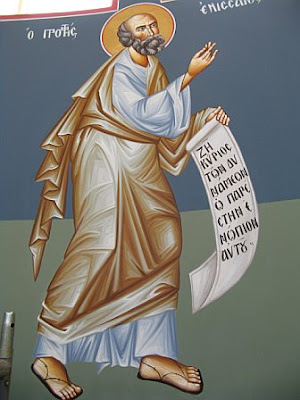
When it became time for the Prophet Elias to be taken up to Heaven, he said to Elisha, "Ask what shall I do for you, before I am taken from you." Elisha boldly asked for a double portion of the grace of God: "Let there be a double portion of your spirit upon me." The Prophet Elias said, "You have asked a hard thing; if you see me when I am taken from you, then so shall it be for you; but if you don't see me, it will not be" (4 [2] Kings 2: 12). As they went along the way talking, there appeared a fiery chariot and horses and separated them both. Elisha cried out, "My father, my father, the chariot of Israel and its horse!" (4 Kings 2: 12). Picking up the mantle of his teacher which fell from the sky, Elisha received the power and prophetic gift of Elias. He spent more than 65 years in prophetic service, under six Israelite kings (from Ahab to Joash). While Elisha lived, he did not tremble before any prince, and no word could overcome him (Sirach 48:13).
The holy prophet worked numerous miracles. He divided the waters of the Jordan, having struck it with the mantle of the Prophet Elias; he made the waters of a Jericho spring fit for drinking; he saved the armies of the kings of Israel and Judah that stood in an arid wilderness by bringing forth abundant water by his prayer; he delivered a poor widow from death by starvation through a miraculous increase of oil in a vessel. The Shunamite woman showing hospitality to the prophet was gladdened by the birth of a son through his prayer, and when the child died, he was raised back to life by the prophet. The Syrian military-commander Namaan was healed from leprosy but the prophet's servant Gehazi was afflicted since he disobeyed the prophet and took money from Namaan on the sly.
Elisha predicted to the Israelite king Joash the victory over his enemies, and by the power of his prayer he worked many other miracles (4 Kings 3-13). The holy Prophet Elisha died in old age at Samaria. "In his life he worked miracles, and at death his works were marvellous" (Sir. 48: 15). A year after his death, a corpse was thrown into the prophet's grave. As soon as the dead man touched Elisha's bones, he came to life and stood up (4 Kings 13: 20-21). The Prophet Elisha and his teacher, the Prophet Elias, left no books behind them, since their prophetic preaching was oral. Jesus, son of Sirach, praised both great prophets (Sir. 48:1-15).
John of Damascus composed a canon in honor of the Prophet Elisha, and at Constantinople a church was built in his honor.
Julian the Apostate (361-363) gave orders to burn the relics of the Prophet Elisha, Abdia (Obadiah) and John the Forerunner, but the holy relics were preserved by believers, and part of them were transferred to Alexandria.
In the twentieth century, the humble priest Nicholas Planas had a great veneration for the Prophet Elisha, and was accounted worthy to see him in visions.
Source

Apolytikion in the Fourth Tone
The incarnate Angel, and the Prophets' summit and boast, the second forerunner of the coming of Christ our God, Elias, the glorious, from above sent down his grace upon Elisseus; he doth cast out sickness and doth also cleanse lepers; and unto all that honour him, he poureth forth streams of cures.
Kontakion in the Plagal of the Fourth Tone
A prophet of God didst thou become when worthily thou hadst been vouchsafed a double portion of God's grace as Elias' true companion, O Elisha, divinely-blest; and with him, thou unceasingly entreatest Christ God in behalf of us all.
