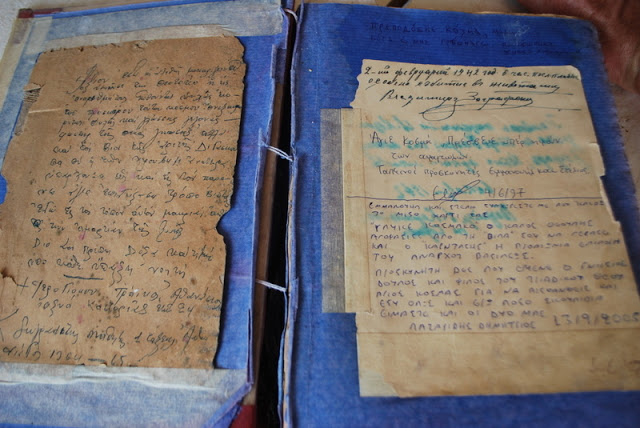
The cave of Saint Kosmas of Zographou is located in the location of Gerakofilia, about half an hour away from the Holy Monastery of Zographou in Mount Athos.
The Saint is considered the greatest ascetic to emerge from Zographou. His cavernous cell became the place of struggle with demons. There he was buried and from there he departed for the joy of his Lord. The admirable thing is that forty days after his burial the monks looked for his relic, but did not find it.
Gerasimos Smyrnakis (1903) mentions that the cave was also used as an observation post for forest rangers.
Brief Biography
Saint Kosmas, an ascetic of Zographou Monastery at the Holy Mountain, was a Bulgarian. In his youth he avoided entering into marriage, and secretly left his parents' home for Mount Athos. Then as he was on his way to the Holy Mountain, the devil tried to shake the yearning of the youth, vexing him with a vision of the infinite abyss of the sea surrounding the Holy Mountain. The fervent prayer of the youth dispelled the demonic temptation.
On Athos, Kosmas was accepted in Zographou Monastery. There he was a novice for a long time, and then he was tonsured, and was appointed ecclesiarch. Kosmas was made worthy to see the heavenly abbess of Mount Athos herself, who on the Feast of the Annunciation at Vatopaidi Monastery deigned to reveal to him a glimpse of her care for her earthly appanage. He saw a woman of royal majesty and grandeur, who both attended in church for services and in the trapeza. All the monks served and obeyed her.
Soon the Saint was ordained as deacon, and then as presbyter, which inspired him to new exploits. Zealous for salvation, the Saint through fervent prayer to the Most Holy Theotokos was granted a particular sign of her special favor. He heard the voice of the Mother of God issuing from her holy icon and asking her Son, "How will Kosmas be saved?" The Lord answered, "Let him withdraw from the monastery into silence." After obtaining the blessing of the abbot, Saint Kosmas withdrew into the wilderness, and there in a cave cut into a cliff, began his new deed of silent seclusion. God did not forsake the faithful man of prayer, for the Saint was granted the gift of clairvoyance.
Just as at the start of his ascetic life, the enemy of the race of mankind again tried to dissuade the Saint from his intended path, and so the final days before the venerable one's death were also a grievous trial for him.
Not long before the death of God's chosen one, he was granted a vision of Christ Himself, Who informed the Saint that before his soul would depart to the heavenly Kingdom, Satan himself with his hosts would beat and gnash at him. Prepared for the suffering by this divine solace, the Saint bravely underwent the terrible demonic assaults, and on the third day after furious beatings, he received the All-Pure Mysteries. With words of praise on his lips, he peacefully departed to the Lord.
God, "Who glorifies those who glorify Him," also glorified Saint Kosmas miraculously at his death. At the time of the Saint's burial a multitude of beasts and birds flocked to his cave, as though sensing the common loss of the Holy Mountain. When they placed his body in the grave and began to cover it with ground, each of the speechless creatures let out a mournful cry, bestowing final respect to the Saint of God.
Forty days later, when the brethren opened the Saint's tomb after the all-night vigil (as was customary), in order to transfer them to the monastery with honor, they were not to be found. The Lord hid them in a miraculous manner. This occurred in the year 1323.
The Saint is considered the greatest ascetic to emerge from Zographou. His cavernous cell became the place of struggle with demons. There he was buried and from there he departed for the joy of his Lord. The admirable thing is that forty days after his burial the monks looked for his relic, but did not find it.
Gerasimos Smyrnakis (1903) mentions that the cave was also used as an observation post for forest rangers.
Brief Biography
Saint Kosmas, an ascetic of Zographou Monastery at the Holy Mountain, was a Bulgarian. In his youth he avoided entering into marriage, and secretly left his parents' home for Mount Athos. Then as he was on his way to the Holy Mountain, the devil tried to shake the yearning of the youth, vexing him with a vision of the infinite abyss of the sea surrounding the Holy Mountain. The fervent prayer of the youth dispelled the demonic temptation.
On Athos, Kosmas was accepted in Zographou Monastery. There he was a novice for a long time, and then he was tonsured, and was appointed ecclesiarch. Kosmas was made worthy to see the heavenly abbess of Mount Athos herself, who on the Feast of the Annunciation at Vatopaidi Monastery deigned to reveal to him a glimpse of her care for her earthly appanage. He saw a woman of royal majesty and grandeur, who both attended in church for services and in the trapeza. All the monks served and obeyed her.
Soon the Saint was ordained as deacon, and then as presbyter, which inspired him to new exploits. Zealous for salvation, the Saint through fervent prayer to the Most Holy Theotokos was granted a particular sign of her special favor. He heard the voice of the Mother of God issuing from her holy icon and asking her Son, "How will Kosmas be saved?" The Lord answered, "Let him withdraw from the monastery into silence." After obtaining the blessing of the abbot, Saint Kosmas withdrew into the wilderness, and there in a cave cut into a cliff, began his new deed of silent seclusion. God did not forsake the faithful man of prayer, for the Saint was granted the gift of clairvoyance.
Just as at the start of his ascetic life, the enemy of the race of mankind again tried to dissuade the Saint from his intended path, and so the final days before the venerable one's death were also a grievous trial for him.
Not long before the death of God's chosen one, he was granted a vision of Christ Himself, Who informed the Saint that before his soul would depart to the heavenly Kingdom, Satan himself with his hosts would beat and gnash at him. Prepared for the suffering by this divine solace, the Saint bravely underwent the terrible demonic assaults, and on the third day after furious beatings, he received the All-Pure Mysteries. With words of praise on his lips, he peacefully departed to the Lord.
God, "Who glorifies those who glorify Him," also glorified Saint Kosmas miraculously at his death. At the time of the Saint's burial a multitude of beasts and birds flocked to his cave, as though sensing the common loss of the Holy Mountain. When they placed his body in the grave and began to cover it with ground, each of the speechless creatures let out a mournful cry, bestowing final respect to the Saint of God.
Forty days later, when the brethren opened the Saint's tomb after the all-night vigil (as was customary), in order to transfer them to the monastery with honor, they were not to be found. The Lord hid them in a miraculous manner. This occurred in the year 1323.